Social Movement Technologies
Get updates
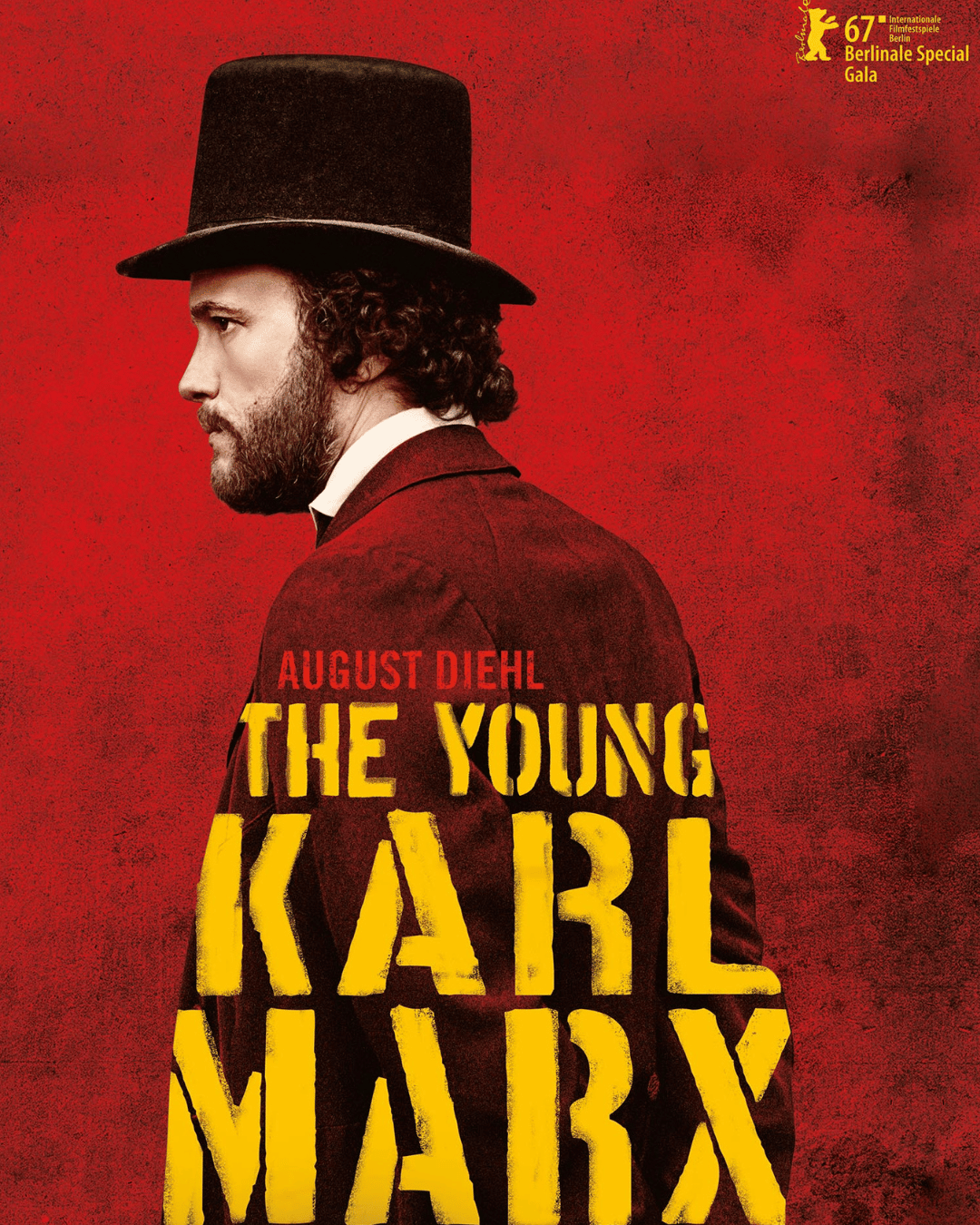
A richly detailed historical drama directed by Raoul Peck (who also created I Am Not Your Negro) that traces the birth of modern revolutionary thought — and the organizing that fueled it. Set in the 1840s, it follows Karl Marx (August Diehl) and Friedrich Engels (Stefan Konarske) as they navigate exile, poverty, and repression in Europe while developing the ideas that would transform global movements for justice.
The film brings history alive not through theory alone, but through movement relationships. Marx and Engels meet as restless young radicals — Marx a fiery journalist exposing capitalist exploitation, Engels a factory owner’s son who sides with workers after witnessing their brutal conditions in Manchester. Together, they form alliances with labor organizers, printers, and dissidents striving to unify a fragmented left under an international cause.
What makes The Young Karl Marx compelling is its focus on strategy, debate, and organizing. We see clashes over tactics and ideology within the early workers’ movement — between utopian idealists, anarchists, and those calling for disciplined collective struggle. The film culminates in the drafting of The Communist Manifesto (1848), a document born not of armchair philosophy but of movement necessity — written hastily in exile as revolutions erupted across Europe.
The Young Karl Marx is remarkably faithful to historical record in its major events and atmosphere. It draws from Marx and Engels’ correspondence and contemporary accounts, accurately portraying their surveillance by police, ideological conflicts within socialist circles, and the grinding poverty that tested their convictions. The film compresses timelines and simplifies dialogue but retains factual precision and intellectual honesty — capturing the historical urgency of a moment when revolutionary ideas spread as fast as censorship could suppress them.
The film also portrays, with some restraint, the critical roles of Jenny von Westphalen (Marx’s wife) and Mary Burns (Engels’ partner).
• Jenny von Westphalen was far more than a supportive spouse — she was Marx’s editor, political confidante, and co-strategist. She endured exile, destitution, and police raids alongside him, copying manuscripts by hand and debating theory late into the night. The film hints at her influence but only partially conveys her deep involvement in shaping Marx’s thinking and sustaining their family under persecution.
• Mary Burns, an Irish working-class woman Engels met in Manchester, introduced him to the realities of industrial exploitation that formed the basis of his seminal work The Condition of the Working Class in England. Politically active herself, she hosted workers’ gatherings and helped Engels evade police surveillance. The film portrays her as outspoken and loyal, though it underplays her organizing role and the political partnership they shared.

This will close in 0 seconds