Social Movement Technologies
Get updates
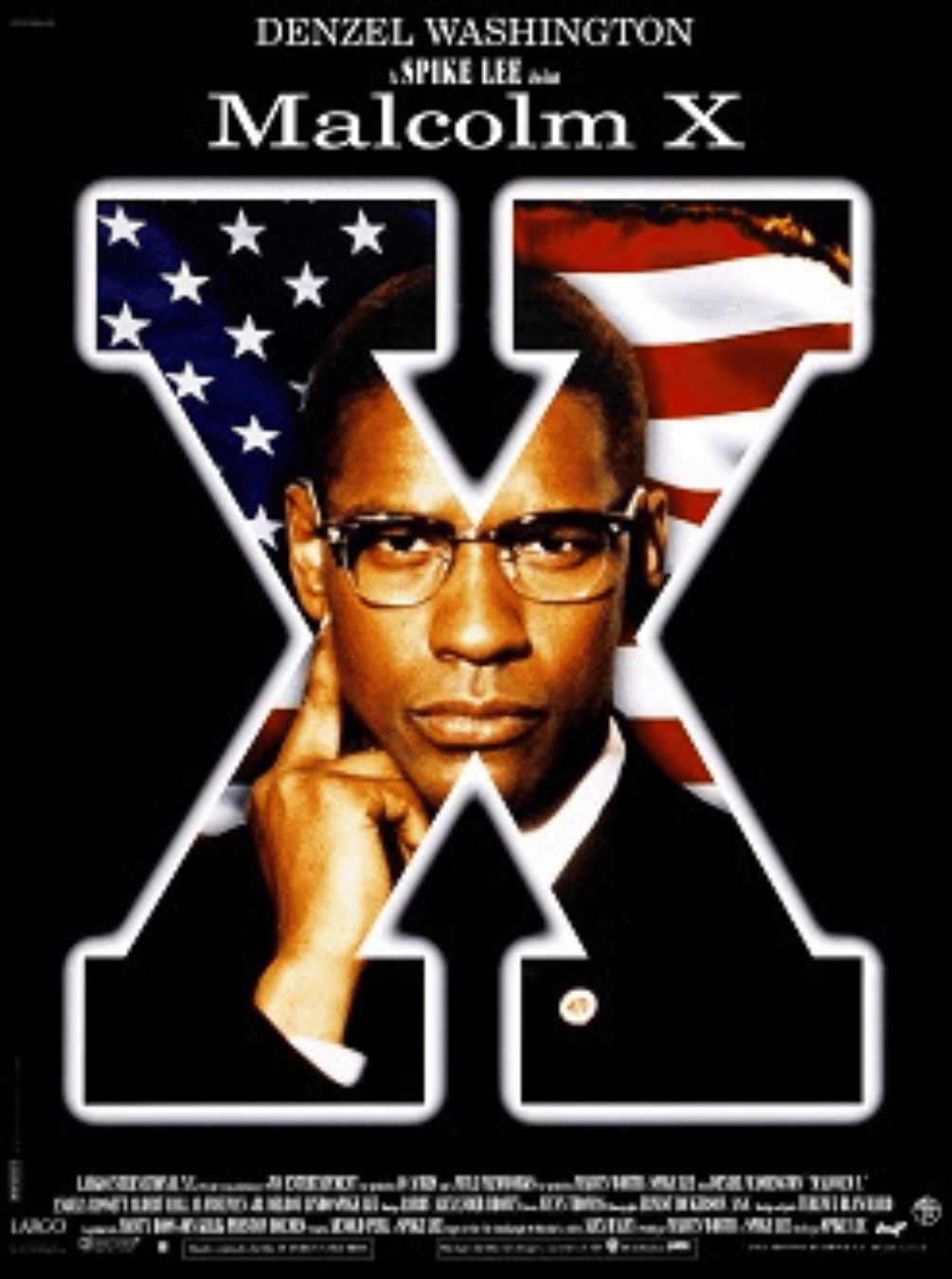
A powerful and sweeping biographical film that brings to life the radical evolution of one of the most influential Black leaders in U.S. history. Directed by Spike Lee and starring Denzel Washington in a commanding, Oscar-nominated performance, the film follows Malcolm Little’s transformation—from hustler and prisoner to Malcolm X, minister of the Nation of Islam, and ultimately to El-Hajj Malik El-Shabazz, an internationalist and human rights advocate.
Grounded in The Autobiography of Malcolm X, the film traces his early encounters with white supremacy and state violence, his meteoric rise as a speaker demanding Black dignity and self-determination, and his ideological evolution after breaking with the Nation of Islam. As Malcolm’s worldview expands through travels in Africa and the Middle East, he begins building bridges across movements—linking the Black freedom struggle to global anti-colonial resistance.
While the film focuses primarily on Malcolm’s individual journey, history reveals a crucial—and often overlooked—turn near the end of his life: the growing convergence between Malcolm X and Dr. Martin Luther King Jr. Though long seen as ideological opposites, by the mid-1960s, both men had come to oppose the Vietnam War, denounce U.S. imperialism, and call for deep structural change. They met publicly only once, briefly, in 1964—but behind the scenes, they began expressing mutual respect and recognition of shared goals. Had they lived, their evolving unity—uniting radical internationalism with mass-based civil disobedience—may have posed a profound threat to the U.S. government’s ability to contain and co-opt the Black liberation movement.
Malcolm’s core principles—Black self-determination, anti-colonial solidarity, self-defense, and relentless truth-telling—are shown not only as deeply personal, but as tools to awaken mass consciousness and organize for transformation. His assassination in 1965 left a deep wound in the movement—but his legacy lives on through generations of Black activists, writers, and organizers. His wife, Dr. Betty Shabazz, carried forward his work through education and advocacy, while their daughters—including the late Malikah Shabazz and Ilyasah Shabazz—have continued to protect and expand his legacy, speaking and writing on issues of justice, identity, and Black history.
For today’s organizers, Malcolm X is both an inspiration and a challenge: a call to reckon with power, evolve politically, and remain unflinching in the pursuit of liberation.
The film is appropriate for adults and older teens. It includes depictions of racism, state violence, and assassination, but centers the legacy of a leader whose vision continues to shape movements for justice, dignity, and freedom across the globe.

This will close in 0 seconds