Social Movement Technologies
Get updates
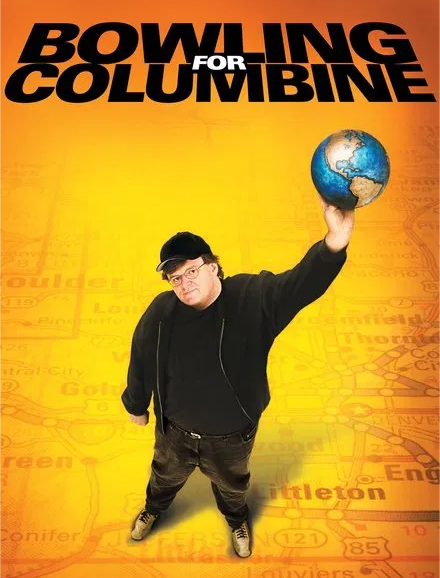
A darkly funny and deeply unsettling exploration of gun violence and fear in the United States, directed by Michael Moore. Beginning with the 1999 Columbine High School massacre, the film expands into a sweeping investigation of how violence is embedded in the country’s politics, media, and economy — from militarism abroad to inequality and racism at home.
Moore’s signature mix of wit, confrontation, and empathy exposes the contradictions of a nation where mass shootings coexist with narratives of freedom and safety. Interviews with survivors, gun owners, police officers, and politicians — including a tense exchange with NRA president Charlton Heston — reveal how fear is manufactured and sold, keeping citizens divided while corporations profit from insecurity.
Filmed across the U.S. and Canada, Bowling for Columbine contrasts the American culture of fear and individualism with Canada’s relative peace and social trust, asking what it would take for a society to build solidarity instead of fear. Moore connects everyday gun violence to the broader machinery of militarism — a system where aggression is normalized, from foreign wars to domestic policing.
In one of the film’s most unforgettable moments, Moore accompanies two young Columbine survivors — both of whom were shot and left permanently injured — to the headquarters of Kmart, whose ammunition had been used in the attack. What begins as a direct, emotional appeal turns into a historic win: after meeting with them face to face, Kmart agrees to stop selling handgun ammunition nationwide. The moment stands as a rare and deeply human example of grassroots power confronting corporate complicity — a small but real victory that embodies the larger demands of the movement for gun accountability.
The film became a cultural turning point, winning the Academy Award for Best Documentary Feature and igniting renewed national debate on gun control and structural violence. More than two decades later, its urgency endures: the U.S. continues to face an epidemic of mass shootings, even as new generations of activists — from Parkland’s March for Our Lives to community-based violence prevention networks — carry forward the struggle for safety, solidarity, and systemic change.
Powerful, provocative, and unexpectedly humorous, Bowling for Columbine remains one of the most influential movement documentaries ever made — a searing reminder that confronting violence requires not only new laws, but new values built on care, equity, and collective responsibility.

This will close in 0 seconds